Each score is graded separately against Maryland schools. A school can be strong at moving students forward (growth) without having the highest test scores, or the reverse. How we score schools
What Goes Into This Rating
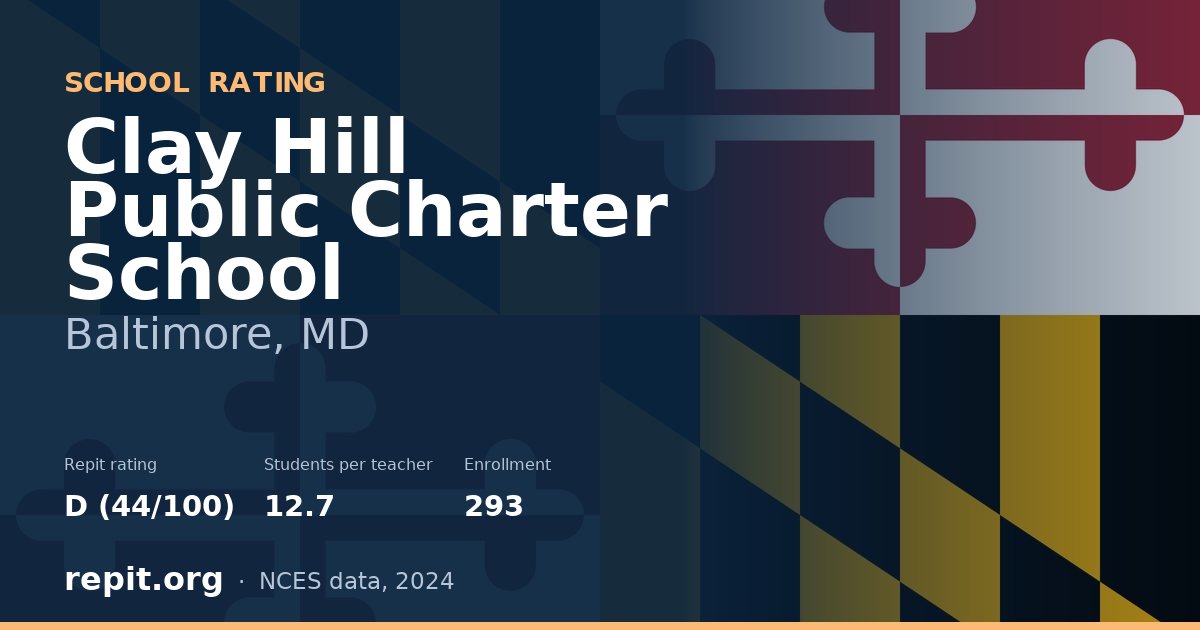
| Factor | Weight | Score | Basis |
|---|---|---|---|
| 📚 Achievement (reading & math, grades 3–8) | 75% | 18/100 | 2.7 grade levels below the national average, 2022–25 (Stanford SEDA) |
| 🏫 Resources (class size, funding, size, type) | 25% | 90/100 | Inputs from NCES school and district data |
Students served: 60% students directly certified for free meals (their families receive SNAP or similar aid). Compared with Maryland schools serving a similar share of low-income students, this school’s reading and math results are −15 points worse than expected. (Context only; not part of the score.)
The overall Repit Score ranks this blend against every rated school in Maryland. Schools are compared within their state because each state sets its own tests and proficiency bar. How we rate schools
School Information
| Address | 6410 E Pratt Street |
| City | Baltimore |
| ZIP Code | 21224 |
| District | 2400090 |
| NCES School ID | 240009001770 |
| Data Year | 2024-25 |
Community Context for 21224
Understanding the community around Clay Hill Public Charter School helps evaluate the school environment and neighborhood.
💰 Income & Economy
| Median Household Income | $86,443 |
| Per Capita Income | $51,164 |
| Poverty Rate | 12.3% |
| Households Earning $100K+ | 44.1% |
🎓 Education Level
| Bachelor's Degree or Higher | 48.8% |
| High School or Higher | 85.6% |
🏠 Housing
| Median Home Value | $260,200 |
| Median Rent | $1,740 |
| Owner-Occupied | 61.2% |
| Renter-Occupied | 38.8% |
Thinking about moving into this school’s area? See what homes and rents actually cost in ZIP 21224 — values, rent, and how it compares to nearby ZIPs. Free, no signup. See 21224 housing costs →
Student Demographics
Enrollment and demographic breakdown for Clay Hill Public Charter School.
👫 Gender Distribution
🌎 Race & Ethnicity
📋 Enrollment Summary
| Total Enrollment | 293 |
| Teachers (FTE) | 23.0 |
| Student:Teacher Ratio | 12.7:1 |
Frequently Asked Questions
What is the Repit School Score for Clay Hill Public Charter School?
How many students attend Clay Hill Public Charter School?
What grades does Clay Hill Public Charter School serve?
How much funding does Clay Hill Public Charter School receive per student?
Other Schools in 21224
About Repit School Scores
Parents choosing a school deserve to see what it actually delivers. Since October 2026 the Repit School Score is built mainly on results:
- Academics (largest share) — the share of students scoring proficient in reading and math on the state test, ranked against schools of the same level in the same state.
- Graduation (high schools) — the four-year adjusted cohort graduation rate. Only regular diplomas count; GEDs and certificates of attendance do not.
- Resources (smaller share) — class size, per-pupil funding, school size and type.
Scores compare schools within their own state, because every state writes its own tests and sets its own proficiency bar. Full methodology
Data sources: NCES CCD 2024-25, U.S. Dept. of Education EDFacts (test results & graduation) | Last updated: October 2026