DigiPen Institute of Technology
Suggested Focus: For this type of institution, we recommend prioritizing the Outcomes Score (B) which measures graduation and job placement rates — the most relevant metrics for career programs.
Graduation Rate: 52%
Two ratings: the overall grade compares colleges the conventional way (outcomes, cost, resources, experience, reputation). The Outcome Rating asks what students earn: 60% wage-adjusted earnings 10 years after enrolling, 25% graduation, 15% retention. Methodology
Quick Stats
Earnings, Debt & Completion
What happens to students who enroll at DigiPen Institute of Technology, from the U.S. Department of Education’s College Scorecard.
Typical debt at graduation equals about 34% of one year’s median earnings ten years after entry.
Earnings rank: 89th percentile among bachelor’s-degree-focused colleges after a partial adjustment for local wage levels (WA wage index 1.18). This drives the Outcome Rating.
Source: U.S. Department of Education College Scorecard, retrieved Oct 2026. Earnings are for federally aided students who enrolled, whether or not they graduated.
Earnings by Major at DigiPen Institute of Technology
Median pay of bachelor's degree graduates by field of study, and how each program ranks against every college reporting that major — by raw pay and adjusted for state wage levels. Same school, very different paychecks.
| Major | 1 yr after | 4 yrs after | vs. national | Rank (pay) | Rank (wage-adj.) | Median debt |
|---|---|---|---|---|---|---|
| Computer Programming | $102,580 | $137,503 | +65% | #1 of 30 | #1 | $27,000 |
| Computer Software and Media Applications | $81,885 | $122,375 | +108% | #3 of 54 | #3 | $26,924 |
| Computer Engineering | $101,832 | — | — | — | — | — |
| Human Computer Interaction | $50,265 | $87,243 | +73% | #3 of 5 | #3 | $27,000 |
| Graphic Communications | $37,605 | $45,571 | +5% | #24 of 59 | #36 | $27,000 |
Source: U.S. Department of Education College Scorecard, field-of-study data. Earnings are for graduates who received federal aid and were working; small programs are not reported.
The DigiPen Institute of Technology Town Property Report
- Avg home value near campus: $1,315,432
- Avg rent near campus: $2,653/mo — vs ~$1,028/mo campus room rate
- Top nearby ZIP by cap rate: 98008 (2.4% cap, Bellevue)
Get the free 1-page report: rent-vs-dorm math, the 3 best nearby ZIPs by yield, and the “kiddie condo” strategy parents use.
Free — no spam, unsubscribe anytime.
🏆 Where DigiPen Institute of Technology Ranks
Rankings based on Repit College Grade among schools offering each program.
Costs & Financial Aid
Tuition & Fees
| Category | In-State | Out-of-State |
|---|---|---|
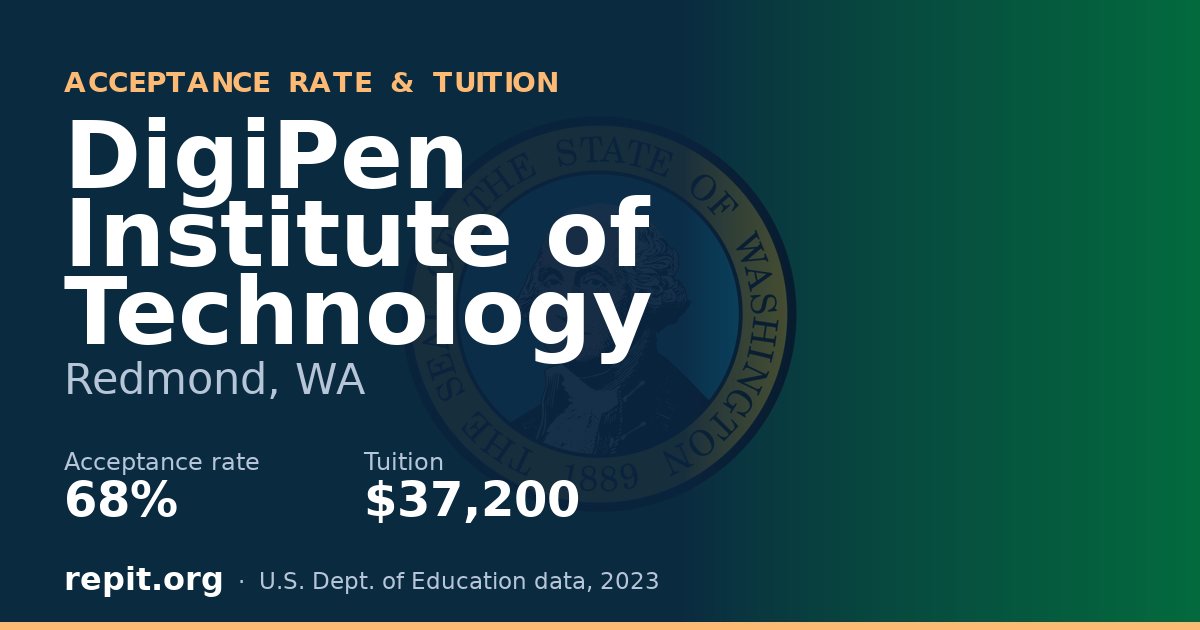
| Tuition | $37,200 | $37,200 |
| Room | $9,250 | |
| Total Cost (On-Campus) | $59,292 | $59,292 |
Financial Aid
Programs & Career Paths
Top Degree Programs
Programs ranked by number of degrees awarded annually.
Related Career Paths
Careers that graduates from DigiPen Institute of Technology's top programs commonly pursue.
Student Demographics
👥 Race & Ethnicity
🏠 Living Arrangements
💻 Learning Mode
📊 Age Distribution
Frequently Asked Questions
What is the acceptance rate at DigiPen Institute of Technology?
How much does it cost to attend DigiPen Institute of Technology?
What is the graduation rate at DigiPen Institute of Technology?
Is DigiPen Institute of Technology a good school?
- Outcomes (B): Graduation and retention rates
- Affordability (F): Net cost and financial aid access
- Resources (C+): Class sizes and selectivity
- Experience (B+): Campus life and learning format
- Prestige (D): Reputation and recognition
How many students attend DigiPen Institute of Technology?
Deciding between a dorm and buying near campus? Run the numbers for DigiPen Institute of Technology — four years of dorm costs vs. owning, including what you’d recover at resale. Buy vs Dorm calculator →
🎓 Similar Colleges to DigiPen Institute of Technology
Compare with other 4-Year private for-profit institutions of similar size.
Data source: IPEDS 2023-24 | Last updated: October 2026 | Methodology